How to Apply to University in the UK: The Complete 2026 Guide
To apply to university in the UK, every undergraduate applicant must use UCAS (Universities and Colleges Admissions Service). You can apply to up to five courses, submit one personal statement, and pay a single application fee of £28.95. The main deadline is 14 January 2026. GST Global Study Trainer in Manchester guides adult learners through every step.
What Is UCAS and Why Does Every UK University Applicant Need It?
The Universities and Colleges Admissions Service known universally as UCAS is the UK’s centralized system for processing undergraduate university applications. Whether you want to study Law at Manchester, Nursing at Leeds, or Business Management at Birmingham, all full-time undergraduate applications go through UCAS. There is no alternative route for most UK universities, and it is not possible to apply directly.
UCAS operates as an independent charity on behalf of UK universities and colleges. It processes over 700,000 applications per cycle, manages course offers, and coordinates results and Clearing. For applicants, it is the single portal through which everything happens from registering your interest to accepting your final offer.
For 2026 entry, UCAS operates the UCAS Hub: an online dashboard where you build, track, and manage your application. The Hub displays your progress across all sections, alerts you to outstanding tasks, and keeps a record of every decision made by universities on your choices. Understanding the Hub before you begin will save you significant time and confusion during what is one of the most important processes of your academic life.
The UCAS application fee for 2026 entry is £28.95 for up to five choices. This is a one-off charge covering the full cycle, regardless of how many courses you apply to (within the five-choice limit). If you apply to only one choice for example, through a specialist conservatoire route the fee may differ.
UCAS Key Dates and Deadlines 2026: When Should You Apply?
Timing is one of the most critical elements of a successful UCAS application. Missing a deadline does not just delay your application in some cases, it can mean losing your chance of a place at your chosen university entirely. Below is a complete breakdown of every key UCAS date for the 2026 entry cycle.
| Key UCAS Event | Date & Detail |
| Applications open for 2026 entry | 2 September 2025 — earliest date to submit a completed application |
| Oxbridge, Medicine, Dentistry & Vet deadline | 15 October 2025 at 18:00 (UK time) — strict; no exceptions |
| Equal consideration deadline (most courses) | 14 January 2026 at 18:00 (UK time) — recommended for all applicants |
| University decisions due (Jan applicants) | 13 May 2026 — universities must respond by this date |
| UCAS Extra opens | 26 February 2026 — if you have no offers and want to add another choice |
| UCAS Extra closes / final application deadline | 30 June 2026 at 18:00 (UK time) — last day for all applications |
| A-Level Results Day | Thursday 13 August 2026 — conditional offers resolved |
| Clearing opens | 2 July 2026 (proactively) — available after results day |
| Clearing closes | 19 October 2026 — last day to add a Clearing choice in Hub |
What Does ‘Equal Consideration’ Mean?
All applications received by UCAS at or before 18:00 on 14 January 2026 are treated equally no university can priorities an application it received in September over one received on 14 January. This means there is no advantage to applying on the very first day the portal opens, but there is a significant disadvantage to applying after the deadline. Late applications may still be considered if places remain, but universities are under no obligation to review them.

Should You Apply Early?
While equal consideration applies up to the January deadline, many admissions advisers recommend submitting your application in October or November. Applying early gives your referee maximum time to write a thorough, considered reference, reduces the pressure of last-minute changes, and ensures your personal statement receives the attention it deserves. GST Global Study Trainer recommends all applicants to have a complete, reviewed application ready to submit by 30 November 2026 at the latest.
How to Choose the Right Course and University to Apply to UK in 2026
Before you register with UCAS, you need to make one of the most important decisions of your academic journey: which course to study and where. Getting this right is not just about prestige it is about finding the combination of subject, teaching style, location, and career pathway that is genuinely right for you.
Course Selection: What to Look For
UK universities offer significantly more course variety than many applicants expect. A subject like Psychology, for example, might be offered as a straight degree, a combined honours with Criminology, a degree with a clinical placement year, or a course accredited by the British Psychological Society. Before committing to any application, research the following for every course on your shortlist:
- Module content — what you will actually be studying each year
- Teaching format — lecture-heavy, seminar-based, or project-led
- Assessment method — essays, exams, coursework, or practical work
- Entry requirements — specific subject requirements, UCAS Tariff points, and grade conditions
- Accreditation — particularly important for Law, Medicine, Engineering, and Education
- Graduate outcomes — employment rates and average graduate salaries after three years
Using the Five-Choice Strategy Wisely
UCAS allows you to apply to up to five courses in a single cycle. Universities cannot see your other choices until after you have responded to all offers, so there is no reputational risk in mixing prestigious and mid-ranking institutions. The standard strategic approach is to apply to a balanced spread: one or two ‘reach’ institutions where your grades are at the bottom of the typical offer range, two or three ‘target’ institutions where your profile is a good match, and one ‘safety’ institution where your grades comfortably exceed the typical offer. This maximizes your chances of holding at least one firm offer that you are genuinely excited about.
Open Days and Campus Visits — Do Not Skip Them
Every UK university holds open days throughout the spring and summer preceding applications. These are not optional extras — they are essential. A university that looks outstanding on paper can feel completely wrong in person, and vice versa. Open days allow you to speak directly with academic staff from your target department, ask current students candid questions, assess the campus environment and facilities, and determine whether the city or town suits your lifestyle. For adult learners with families or employment commitments, visiting in person also clarifies practical logistics such as commuting distance, part-time study options, and childcare facilities.

Step-by-Step UCAS Application Guide 2026: How to Apply to University UK
The UCAS application process is straightforward when broken into clear stages. Follow these eight steps to submit a strong, complete application before the January 2026 deadline. This is your essential ucas application guide for the 2026 cycle.
| Step 1: Register on the UCAS Hub Go to ucas.com and create your account on the UCAS Hub. Enter your basic personal details, verify your email address, and confirm you are applying for undergraduate study in 2026. You will be issued a unique 10-digit UCAS Personal ID, keep this safe, as every university and college will reference it throughout your application journey. If you are applying through a school or college, ask your adviser for the institution ‘buzzword’ to link your account to your centre. |
| Step 2: Complete Your Personal Details Fill in all mandatory sections: contact address, nationality, residency status, and whether you have any disabilities or additional support needs. UK students will also see optional diversity monitoring questions about parental education and background, these are confidential and have no bearing on admissions decisions. Keep your email address current, as all university communications will be sent there. |
| Step 3: Enter Your Education and Qualifications Declare all qualifications you have studied, from GCSEs through to A Levels, BTECs, access courses, or international equivalents. Include qualifications with pending results, mark them as ‘awaiting results.’ List the actual qualification name and grade as it appears on your certificate; do not attempt to convert foreign grades into UK equivalents yourself. Add any paid employment history if relevant, using the employment section, this is for paid work only. |
| Step 4: Research and Select Your Five Courses Use the UCAS search tool to find courses and check entry requirements carefully. Add up to five courses from any combination of UK universities and colleges. There is no preference order, universities cannot see where else you have applied until after you have responded to all offers. Make sure each course code is correct before submitting; choosing the wrong variant of a course is a common and frustrating error. |
| Step 5: Write Your Personal Statement (New Format for 2026) The UCAS personal statement has changed for 2026 entry. Instead of one free-form essay, you now answer three structured questions within a total character limit of 4,000 (including spaces). Each question requires a minimum of 350 characters. Question 1 asks why you want to study your chosen course. Question 2 asks how your qualifications and studies have prepared you. Question 3 asks about relevant experiences outside formal education. Write in your own voice, be specific, use concrete examples, and avoid AI-generated content. UCAS operates plagiarism detection software. |
| Step 6: Arrange Your Academic Reference Every UCAS application requires one reference from someone who is not a family member, friend, or partner. If you are currently at school or college, your personal tutor or head of year will typically provide this. If you are an adult learner returning to education, a recent employer or manager may be accepted check requirements with your target universities first. Alert your referee well in advance; your application cannot be submitted until they have completed and added their reference to your form. |
| Step 7: Review, Pay, and Submit Before submitting, review every section carefully. UCAS will not allow you to edit your choices or personal statement after submission. Pay the £28.95 application fee directly through the Hub. Once your payment is processed and your referee has submitted their reference, your application is automatically sent to all five universities simultaneously. You will receive a confirmation email with a unique application number. |
| Step 8: Track Your Application and Respond to Offers After submission, monitor your UCAS Hub regularly. Universities will respond with one of four decisions: unconditional offer, conditional offer, unsuccessful, or withdrawal. When all five universities have responded, you must reply to your offers by choosing one firm acceptance and, if you have a conditional offer as a backup, one insurance acceptance. You cannot hold more than two acceptances simultaneously. Deadlines for replying vary depending on when you applied. |
The New UCAS Personal Statement 2026: What Changed and How to Excel
For 2026 entry, UCAS replaced the traditional single free-form essay with three structured questions. This is the most significant change to the personal statement format in over a decade, and it affects every undergraduate applicant regardless of course or institution.

| Your University Place Starts Here GST Global Study Trainer supports adult learners across Greater Manchester and England with expert UCAS guidance, personal statement coaching, and university admissions support from first question to confirmed offer. >> Start Your UCAS Application << Visit gstglobal.co.uk | Free initial consultation | Manchester & nationwide remote support |
The Three New UCAS Personal Statement Questions (2026)
All applicants for 2026 entry must answer the following three questions within a combined 4,000-character limit (including spaces). Each question has a minimum of 350 characters:
| Question | What Admissions Tutors Are Looking For |
| Q1: Why do you want to study this course or subject? | Genuine motivation, subject enthusiasm, specific interests, career alignment, and what sparked your passion |
| Q2: How have your qualifications and studies prepared you for this course? | Relevant skills from formal education, specific modules, coursework, and how your academic background connects to your chosen subject |
| Q3: What relevant experiences outside education have helped prepare you? | Voluntary work, employment, extracurricular activities, hobbies, or life experiences that have developed transferable skills and subject knowledge |
Key Rules for Writing Your 2026 Personal Statement
UCAS’s new format levels the playing field but it still rewards applicants who invest time and care in their responses. The following rules are non-negotiable:
- Do not repeat information each question is distinct; avoid overlap between your three answers
- Be specific replace vague phrases like ‘I am passionate about’ with concrete examples, titles, dates, and outcomes
- Do not use AI to write your statement UCAS uses plagiarism-detection software; AI-generated content risks a flag that could harm your application
- Do not use quotes, clichés, or an introduction. UCAS has explicitly stated no introduction is needed
- Draft multiple times: your first version will not be your best; plan for three to five drafts before submission
- Ask your teachers, advisers, or GST Global’s consultants for feedback but ensure the final words are entirely your own
Understanding UCAS Offers: Conditional, Unconditional, Firm, and Insurance
Once your UCAS application has been reviewed, each university will issue one of four decisions. Understanding what each means and what action is required from you is essential to navigating this stage without making costly errors.
| Offer Type | What It Means & What to Do |
| Conditional Offer | You are offered a place, subject to achieving specific grades (e.g. ABB at A Level). If you meet the conditions on Results Day, your place is confirmed automatically. |
| Unconditional Offer | You are offered a place with no grade conditions. This is common for mature students, those with completed qualifications, or where universities are confident in your profile. |
| Unsuccessful | The university has decided not to make you an offer for this cycle. This decision cannot be appealed through UCAS, though you may contact the admissions team directly. |
| Withdraw | The university has withdrawn your application, often due to an oversubscribed course or your application arriving after internal deadlines. |
Firm and Insurance Choices Explained
Once all five universities have responded, you must reply to your offers. You are allowed to hold a maximum of two acceptances: one Firm choice (your preferred offer) and one Insurance choice (a backup, typically with lower grade conditions). Choosing wisely at this stage is critical, your Insurance choice should be a university and course you would genuinely be happy to attend, not simply the lowest-grade offer available.
If you decline all your offers, or receive no offers at all, you may be eligible for UCAS Extra (26 February to 30 June 2026), which allows you to add one additional choice to your application. If Extra does not result in an offer, Clearing opens in July and continues until October.
A-Level Results Day 2026, Clearing, and Adjustment: What Happens Next
For applicants holding conditional offers, A-Level Results Day on Thursday 13 August 2026 is the moment of resolution. Understanding what happens and what your options are means you will be prepared whatever the outcome.

If You Meet Your Conditions
If your results meet or exceed the conditions of your Firm offer, your place is automatically confirmed. Your chosen university will contact you with next steps regarding registration, accommodation, and enrolment. You do not need to contact them, UCAS processes the update automatically.
If You Exceed Your Conditions: UCAS Adjustment
UCAS Adjustment allows applicants who achieve significantly better grades than expected to apply to universities with higher entry requirements without losing their existing firm offer. You have five days from Results Day to explore Adjustment options. This is a valuable but time-pressured opportunity and requires careful consideration before making any changes.
If You Miss Your Conditions: Clearing
Clearing is available from 2 July 2026 and runs until 19 October 2026. It matches applicants to university places that have not yet been filled. If you miss your conditional offer conditions on Results Day, do not panic Clearing is a legitimate and well-resourced route to a place at a good university, and thousands of applicants successfully find excellent courses through it every year.
To use Clearing, you must be eligible (not currently holding any offers), find a vacancy on the UCAS search tool, call the university directly and quote your Clearing number, receive a verbal offer, and then add it as your Clearing choice in your UCAS Hub. The process moves quickly preparation is key. GST Global advisors provide Clearing-day telephone support to help adult learners navigate this process with confidence.
University Open Days and Campus Visits Near You: Local UCAS Guidance for 2026
Attending a university open day is one of the most valuable steps you can take before submitting your UCAS application. Seeing a campus, meeting staff, and speaking with current students gives you insight that no website or prospectus can replicate. For adult learners and mature applicants, open days are also the ideal opportunity to ask specific questions about flexible study, part-time routes, and support services.
Greater Manchester Campus Visits — GST Local UCAS Guidance

For applicants in Greater Manchester, the following universities host regular open days and campus tours throughout the year. GST Global Study Trainer advises attending at least two before submitting your application:
- University of Manchester (M13 9PL) — open days throughout June and September; ranked in the global top 50 for multiple subjects
- Manchester Metropolitan University (M15 6BH) — professional and applied degrees; regular campus tours and subject-specific events
- University of Salford (M5 4WT) — strong focus on practical, industry-linked courses; city-centre campus tours available year-round
- University of Bolton (BL3 5AB) — smaller campus; accessible entry requirements; particularly welcoming to adult returners
- Manchester Business School — open evenings for business, finance, and management applicants
Regional Campus Visits Across the North West and Beyond
If your course preferences extend beyond Greater Manchester, GST Global supports applicants visiting universities across the region. We provide pre-visit briefing packs and post-visit application consultations for students in:
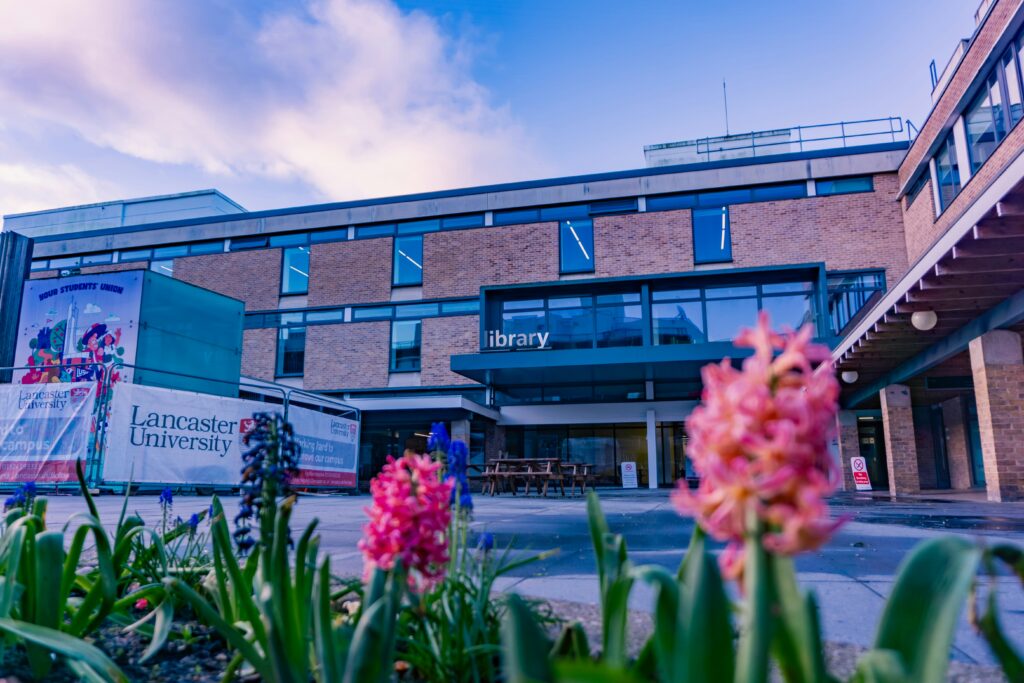
- Lancashire — University of Central Lancashire (Preston), Lancaster University
- Yorkshire — University of Leeds, University of Sheffield, University of Bradford, Huddersfield University
- East Midlands — University of Nottingham, De Montfort University Leicester, University of Derby
- Merseyside — University of Liverpool, Liverpool John Moores University, Liverpool Hope University
- West Midlands — Aston University Birmingham, University of Coventry, Birmingham City University
What to Ask at a University Open Day
Attending an open day without preparation limits its value. Before you visit, prepare specific questions for the admissions team in your target department:
- What does a typical week look like for first-year students on this course?
- How is the course assessed — essays, exams, coursework, or practical projects?
- What is the staff-to-student ratio and how much individual academic support is available?
- What employability or placement support does the university offer?
- Are there part-time or flexible study routes available for mature applicants?
| GST Global UCAS Campus Visit Support Service Before your open day: GST Global provides a tailored pre-visit briefing including the questions to ask, what to look for on your tour, and how to evaluate each campus against your application strategy. After your open day: Book a post-visit consultation to discuss your shortlist, finalize your five UCAS choices, and begin your personal statement. Visit gstglobal.co.uk to book your free session. |
Common UCAS Application Mistakes to Avoid in 2026

Every year, thousands of applicants make avoidable errors that delay their applications, reduce their chances of receiving offers, or cost them places entirely. Based on our extensive experience supporting applicants across Manchester and England, here are the most frequent UCAS pitfalls and exactly how to avoid them:
- Missing the deadline — The 14 January 2026 equal-consideration deadline is fixed. Late applications may still be considered, but universities are under no obligation. Build your submission timeline backwards from this date and aim to submit by 30 November 2025.
- Choosing five identical, ultra-competitive courses — Applying to five universities all requiring AAA at A Level when your predicted grades are ABB is a high-risk strategy. Use the reach/target/safety balance described earlier in this guide.
- Failing to brief your referee early — Your application cannot be submitted without your reference. If your referee is slow to respond or unavailable, your entire application stalls. Brief your referee at least six weeks before your planned submission date.
- Using the old personal statement format — The 2026 personal statement now consists of three questions, not one essay. Using the old single-essay structure will result in a rejected or poorly received submission. Check the current UCAS guidance carefully before starting.
- Using AI to write your personal statement — UCAS’s detection software flags AI-generated content. Universities notified of a flagged statement may withdraw any offer made. Your personal statement must be your own words, your own voice, your own story.
- Selecting the wrong course code — Many courses have multiple variants with similar names but different UCAS codes. Selecting ‘Psychology’ when you intended ‘Psychology with Criminology’ is a surprisingly common error. Verify every code against the course page on each university’s website.
- Not updating UCAS if your circumstances change — If your course, predicted grades, or contact details change after submission, update your UCAS Hub immediately. Outdated information can delay offer decisions or cause administrative complications on Results Day.
Why Choose GST Global Study Trainer for Your UCAS Application?
Applying to university is one of the most consequential decisions of your life. Getting it right from course selection through to accepted offer requires accurate, current knowledge of the UCAS process, strategic thinking about your five choices, and a personal statement that genuinely represents you. GST Global Study Trainer exists to provide exactly that, specifically for adult learners and mature applicants across Greater Manchester and England.

What GST Global Offers
- End-to-end UCAS application support — from account registration to confirmed offer, we guide every step
- Personal statement coaching — structured support with the new three-question format, including draft review, feedback, and final polish
- Course and university shortlisting — tailored recommendations based on your qualifications, career goals, and personal circumstances
- Open day preparation — pre-visit briefings and post-visit application consultations
- Clearing Day support — real-time telephone guidance on Results Day when decisions need to be made quickly
- Student finance guidance — alongside your UCAS application, we help you understand and apply for Student Finance England (see our companion guide)
- Adult learner specialists — we understand the unique challenges of returning to education: employer references, Access to Higher Education courses, career-change applications, and more
Our Manchester advisors have supported hundreds of adult learners to secure places at universities across England. We cut through the complexity of the UCAS process and provide the confidence, clarity, and expert guidance that every applicant deserves regardless of background, age, or previous experience of higher education.

Frequently Asked Questions: How to Apply to University UK in 2026
Q: When should I apply through UCAS?
A: For most undergraduate courses, the UCAS equal-consideration deadline is 14 January 2026 at 18:00 (UK time). For Oxford, Cambridge, Medicine, Dentistry, and Veterinary Science, the deadline is 15 October 2025. You can begin your application from 2 September 2025. GST Global Study Trainer recommends completing your application by 30 November 2025 to allow adequate time for reference submission and final review.
Q: How many universities can I apply to through UCAS?
A: You can apply to a maximum of five courses in a single UCAS cycle. There is no rule that says these must be at five different universities, you can apply to the same university for multiple courses if you wish. Universities cannot see your other choices until after you have responded to all offers.
Q: What is the UCAS application deadline for 2026?
A: There are two main UCAS deadlines for 2026 entry. The first is 15 October 2025 for Oxford, Cambridge, and courses in Medicine, Dentistry, and Veterinary Science. The second and most widely applicable deadline is 14 January 2026 at 18:00 (UK time) for all other undergraduate courses. The final date to submit any application is 30 June 2026, after which all applications are automatically entered into Clearing.
Q: How much does it cost to apply through UCAS in 2026?
A: The UCAS application fee for 2026 entry is £28.95 for up to five course choices. This is a single, one-off payment made through your UCAS Hub at the point of submission. If you are applying through a school or college, your institution may handle the payment on your behalf.
Q: What is the new UCAS personal statement format for 2026?
A: For 2026 entry, the traditional single personal statement essay has been replaced by three structured questions.
Question 1 asks why you want to study your chosen course.
Question 2 asks how your qualifications have prepared you.
Question 3 asks about relevant experiences outside formal education.
The total character limit remains 4,000 (including spaces), with a minimum of 350 characters per question. All three questions are mandatory.
Q: Can adult learners and mature students apply through UCAS?
A: Yes. There is no upper age limit for UCAS undergraduate applications. Adult and mature applicants follow exactly the same UCAS process, though references may be from employers rather than academic tutors in some cases. GST Global Study Trainer specializes in supporting adult learners across Greater Manchester and England, including those returning to education after years in employment or with caring responsibilities.
Q: What is UCAS Clearing and when does it run?
A: UCAS Clearing is a process that matches applicants to university places that have not yet been filled. Clearing proactively opens on 2 July 2026 and runs until 19 October 2026. It is available to applicants who have not received any offers, have declined all their offers, or did not meet the conditions of their firm offer on Results Day (13 August 2026). Thousands of applicants successfully secure excellent university places through Clearing each year.
Q: Do I need to have confirmed A-Level results before applying through UCAS?
A: No. The vast majority of UCAS applicants apply while their A Levels, BTECs, or equivalent qualifications are still in progress. Universities issue conditional offers based on predicted grades. If you already hold completed qualifications (as many adult learners do), some universities may issue unconditional offers. You simply declare your pending results in the qualifications section of your application and mark them as ‘awaiting results.’
Q: Is there UCAS application help near me in Manchester or Greater Manchester?
A: Yes. GST Global Study Trainer, based in Manchester, provides expert UCAS application support, personal statement coaching, and university admissions guidance for adult learners across Greater Manchester including Salford, Rochdale, Bolton, Stockport, Oldham, Bury, Wigan, Tameside, and Trafford. Remote consultations via phone and video are also available for applicants anywhere in England.
| Your University Place Starts Here GST Global Study Trainer supports adult learners across Greater Manchester and England with expert UCAS guidance, personal statement coaching, and university admissions support from first question to confirmed offer. >> Start Your UCAS Application << Visit gstglobal.co.uk | Free initial consultation | Manchester & nationwide remote support |