

Psychology is consistently one of the most applied-for undergraduate courses in the UK. According to UCAS data, over 100,000 students apply for psychology-related degrees each year making it the third most popular subject at British universities. If you’re a UK national student weighing up your options, this is the definitive 2026 guide to BSc in Psychology UK: what it involves, what it costs, where to study, and what you can do with it.

This guide is structured to answer the specific questions UK students ask from A-level requirements and student finance to BPS accreditation and clearing. Whether you’re in Year 13, sitting on an offer, or considering a career change through clearing, read on.
What does a BSc Psychology degree actually cover?
The content of a BSc Psychology degree is surprisingly broad.
Year 1
In 1st year most UK programs build the scientific foundations, you’ll cover core areas like cognitive psychology (how we think and process information), social psychology (how groups and society influence behavior), developmental psychology (how humans change across a lifespan), and biological psychology (the brain and nervous system).

Year 2
2nd year typically deepens these foundations and introduces optional modules, allowing you to begin specializing.
Year 3
3rd year is defined by an independent research dissertation, the most important piece of work in the entire degree, and the one that carries the most weight in your final classification.
Core modules you’ll typically study
While specific modules vary by university, the following are standard across accredited BSc Psychology programmes in the UK:
- Cognitive psychology: Abnormal psychology, Research dissertation
- Social psychology: Forensic psychology, Clinical applications
- Developmental psychology: Health psychology, Neuropsychology
- Research methods & stats: Occupational psychology, Advanced research methods
- Biological psychology: Cross-cultural psychology, Optional specialist modules
The research methods and statistics strand runs throughout all three years this is deliberate. Psychology is a science, and the degree trains you to design studies, collect data, and analyze results using SPSS or R. Employers and postgraduate courses prize this skill above almost anything else you’ll develop.
2. BSc Psychology vs BA Psychology, which is right for you?
This is one of the most searched questions by prospective psychology students, and the answer matters for your career path. Here is an honest comparison:
- Focus: Scientific, research-led, quantitative, Humanistic, social sciences, qualitative
- BPS accreditation: Usually yes, check each university, Often yes but not always
- Best for: Clinical, health, research, neuroscience careers, Counselling, education, social work, arts
- Statistics content: Higher data analysis is core, Lower qualitative methods prioritized
- Path to DClinPsy: Required for doctoral clinical training, Accepted if BPS accredited

Global Study Trainer’s RecommendationIf you want to become a clinical psychologist, educational psychologist, or pursue any chartered psychology route, choose a BPS-accredited BSc. The scientific foundation is a prerequisite for doctoral training in the UK.If you are more interested in the social or humanistic dimensions of psychology like counselling, coaching, or community work a BA may offer a more compatible learning experience, provided it is also BPS-accredited.
Entry requirements for BSc in Psychology UK 2026
Entry requirements vary meaningfully between universities. From AAA at Oxford and Cambridge to CCC at many modern universities and open-entry foundation year programs. Here is what UK national students need to know for the 2026 entry cycle:
A-level requirements
Most accredited BSc Psychology programs in the UK ask for the following:
Alternative qualification routes
You do not need A-levels to study psychology at degree level in the UK. Accepted alternatives include:
BSc Psychology fees and student finance for UK nationals in 2026
As a UK national student, your tuition fees are capped by law. Here is exactly what you can expect to pay and more importantly, what you will not pay upfront.

Tuition fees 2026/27
Maintenance support available to UK students
- Maintenance Loan (living away from home, London): Up to £13,348/year, All UK students (amount means-tested)
- Maintenance Loan (living away from home, outside London): Up to £10,227/year, All UK students (amount means-tested)
- Maintenance Loan (living at home): Up to £8,171/year, All UK students (amount means-tested)
- Disabled Students’ Allowance (DSA): Up to £26,291/year, Students with disabilities, mental health, or learning differences
- University bursaries & scholarships: Varies (£500–£5,000), Check each university’s financial support page
For a detailed breakdown of the full application process and repayment terms, see our Complete Guide to Student Finance England 2026.
BPS accreditation, why it matters and how to check
Not all psychology degrees are equal in the eyes of UK professional bodies. If you plan to work as a psychologist in any regulated capacity clinical, educational, forensic, occupational, your degree must be accredited by the British Psychological Society (BPS).
What BPS accreditation means in practice
Where to study BSc Psychology in the UK, a city-by-city guide
The UK has over 100 universities offering BPS-accredited psychology degrees. Your choice of city will affect your cost of living, industry access, and placement opportunities. Here is a practical breakdown of the major study destinations for UK psychology students:

London
London is home to some of the UK’s most research-intensive psychology departments and has the highest density of NHS trusts, research hospitals, and mental health charities making it the best city for students who want placement or volunteering experience alongside their degree.
Manchester
Manchester is consistently rated one of the best student cities in the UK for value, social life, and career prospects. Its psychology departments have strong industry links with the NHS’s northern networks and a growing private mental health sector.
Birmingham
Birmingham is the UK’s second-largest city and has invested heavily in its higher education sector. It is a particularly good choice for students interested in occupational or forensic psychology, with strong links to the West Midlands criminal justice system and NHS trusts.
Leeds
Leeds has a large student population and an accessible, close-knit university culture. Psychology departments here are known for high student satisfaction scores and strong dissertation supervision. A good choice for students who want a balance of academic rigour and student experience.
Bristol and Edinburgh
Bristol offers strong research programs with a focus on cognitive neuroscience and developmental psychology. Edinburgh is the top choice in Scotland. Scottish students should note that tuition fees are fully funded by SAAS (Student Awards Agency Scotland), making it one of the most cost-effective routes to a psychology degree in the UK.
What can you do with a BSc Psychology degree? Career paths and salaries
A common concern is that a psychology degree only leads to one career: psychologist. In reality, the analytical, research, and communication skills you develop are valued across an unusually wide range of industries. Here is an honest, data-informed breakdown:
Careers that require a psychology degree (and further study)
- Clinical psychologist: £40,000–£70,000+, Doctorate in Clinical Psychology (DClinPsy) 3 yrs NHS-funded
- Educational psychologist: £42,000–£67,000, Masters + Doctorate in Educational Psychology (DEd Psych)
- Forensic psychologist: £36,000–£55,000, MSc Forensic Psychology + Stage 2 qualification (BPS)
- Counselling psychologist: £34,000–£52,000, Doctorate in Counselling Psychology
- Occupational psychologist: £35,000–£60,000, MSc + Stage 2 BPS qualification or Doctorate
Careers accessible directly after your BSc
Many psychology graduates enter the workforce without further academic training. Graduate roles that actively recruit psychology graduates include:
According to HESA’s Graduate Outcomes data, approximately 80% of BSc Psychology graduates in the UK are in employment or further study 15 months after graduation. The median graduate salary after 5 years sits at around £32,000 higher than the UK median for all graduates.
How to apply for BSc Psychology in the UK, step by step guide
All undergraduate applications in the UK go through UCAS (Universities and Colleges Admissions Service). Here is the full process for the 2026 entry cycle:
How GST can help you get your place on a BSc Psychology program
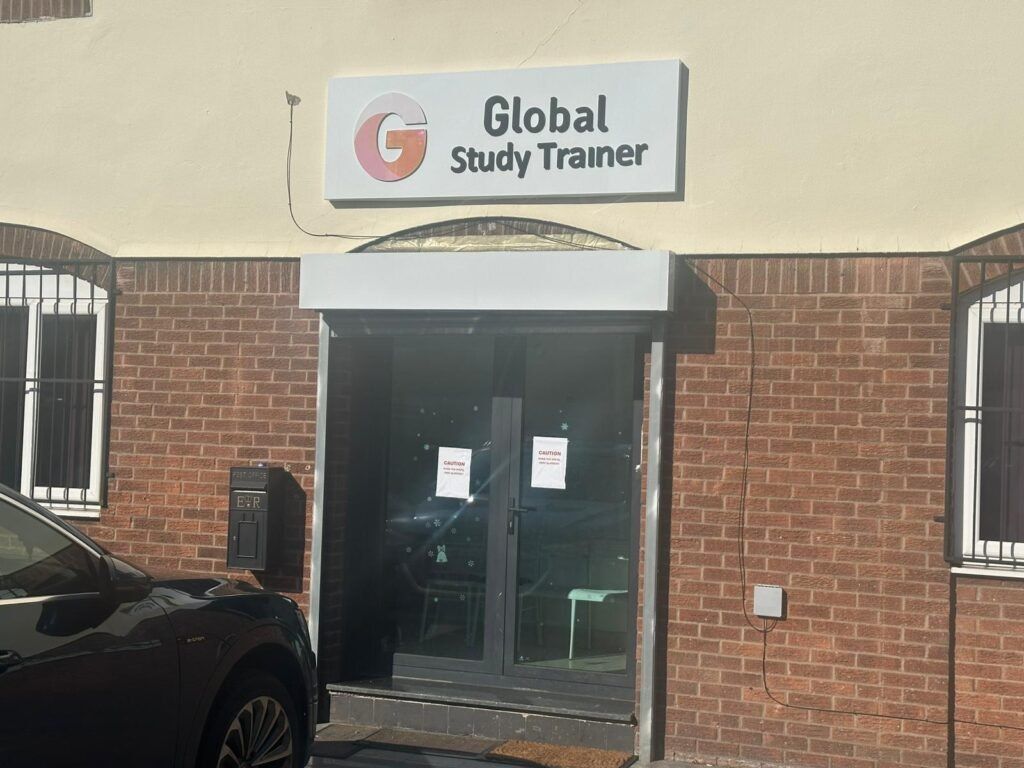
Global Study Trainer (GST Global) is a UK-based education consultancy firm specializing in helping national students navigate the university application process. Our consultants work with students across London, Manchester, Birmingham, Leeds, Bristol, and remotely across the UK.
What GST Global offers UK psychology applicants
Frequently asked questions, BSc Psychology UK 2026
These are the most common questions UK students ask about BSc Psychology.
Is a BSc Psychology degree hard?
BSc Psychology is academically demanding particularly the statistics and research methods component, which surprises many students. The degree is graded like any science: your dissertation and lab reports are marked to a high standard. That said, with good time management and support, the vast majority of students who start the program complete it successfully. The drop-out rate for psychology is lower than the UK university average.
Can I become a clinical psychologist with a BSc?
Yes but a BSc is only the first step. To become a clinical psychologist in the UK you need: (1) a BPS-accredited BSc, (2) relevant post-graduate experience working in a mental health setting (usually 1–3 years), and (3) a Doctorate in Clinical Psychology (DClinPsy), which is a 3-year fully-funded NHS training programme. Competition for DClinPsy places is high typically 7–9 applicants per place.
What is the difference between a psychologist and a psychiatrist?
A psychologist holds a psychology degree and (at chartered level) a doctoral qualification. They assess behavior, provide therapy, and conduct research but cannot prescribe medication. A psychiatrist is a medical doctor (MBBS or equivalent) who specialized in mental health after medical school. Psychiatrists can prescribe medication. BSc Psychology leads toward the psychology pathway, not psychiatry.
Do I need psychology A-level to study BSc Psychology?
No the majority of UK universities do not require A-level Psychology for entry. Biology, Math, or Sociology are sometimes preferred, but most programs accept students with any combination of A-levels, provided you meet the UCAS tariff requirement. The undergraduate degree itself will teach you psychology from scratch.
Is BSc Psychology recognised internationally?
Yes. A UK BSc Psychology from a BPS-accredited university is recognized across Europe, Australia, Canada, and in many other jurisdictions. If you plan to practice in another country, check whether the host country’s professional body has a mutual recognition agreement with the BPS most do.
What is UCAS Clearing and can I use it for psychology?
UCAS Clearing is a system that matches students who do not hold a confirmed offer with universities that still have available places. It opens in early July (before results day) and remains open until October. Many UK universities including those with strong psychology departments participate in Clearing each year. If you miss your grades, Clearing is a real and legitimate route into a psychology degree.
Check related guides on us:
Ready to take the next step?
Book a free consultation and a GST adviser will help you plan your next move.